Advancements in Laser Cutting
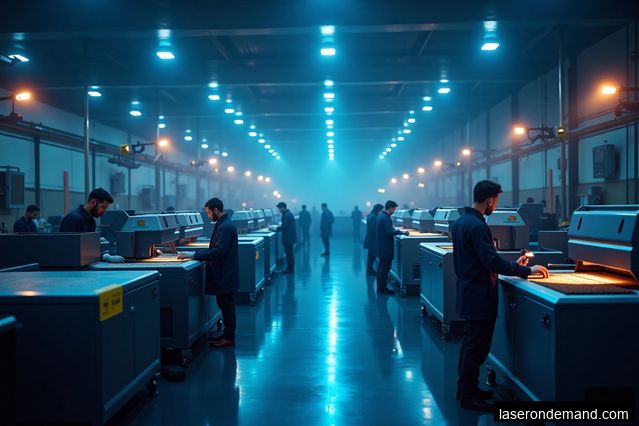
Laser cutting has revolutionized various industries, ranging from manufacturing to fashion. With its precision and versatility, laser cutting has become an essential tool for creating intricate designs and detailed cuts. As technology evolves, we can expect even more advancements in laser cutting techniques.
Automated Laser Cutting Systems
One of the trends in laser cutting is the development of automated laser cutting systems. These systems utilize advanced software and artificial intelligence to optimize the cutting process. By automating repetitive tasks and improving efficiency, businesses can save time and reduce costs.
The Rise of 3D Laser Printing
3D printing has already transformed the manufacturing industry by enabling the production of complex and customized objects. However, the integration of laser technology into 3D printing processes opens up new possibilities. Laser-based 3D printing allows for faster printing speeds, higher resolution, and enhanced material compatibility.
Multi-Material 3D Printing
Currently, most 3D printers can only work with a single material at a time. However, laser technology is enabling the development of multi-material 3D printing. This breakthrough allows for the simultaneous deposition of different materials, resulting in more complex and functional 3D printed objects.
Laser Marking and Engraving Innovations
Laser marking and engraving have become essential processes in various industries, including automotive, electronics, and jewelry. Recent advancements in laser technology offer exciting possibilities for improving marking and engraving capabilities.
High-Speed Laser Marking
Traditionally, laser marking has been a time-consuming process. However, with advancements in laser technology, high-speed laser marking is becoming a reality. This enables faster marking times without compromising quality, increasing productivity for businesses that rely on laser marking.
The Integration of Laser Technology and Robotics
As the demand for on-demand services continues to grow, the integration of laser technology with robotics is becoming increasingly important. Robotic systems equipped with lasers can perform tasks with high precision and speed, making them ideal for automation in various industries.
Laser-Based Inspection and Quality Control
Robots equipped with laser sensors and cameras can perform real-time inspections, ensuring quality control in manufacturing processes. Laser-based inspection systems can detect defects, measure dimensions, and verify product integrity, reducing the need for manual inspections and improving overall efficiency.